
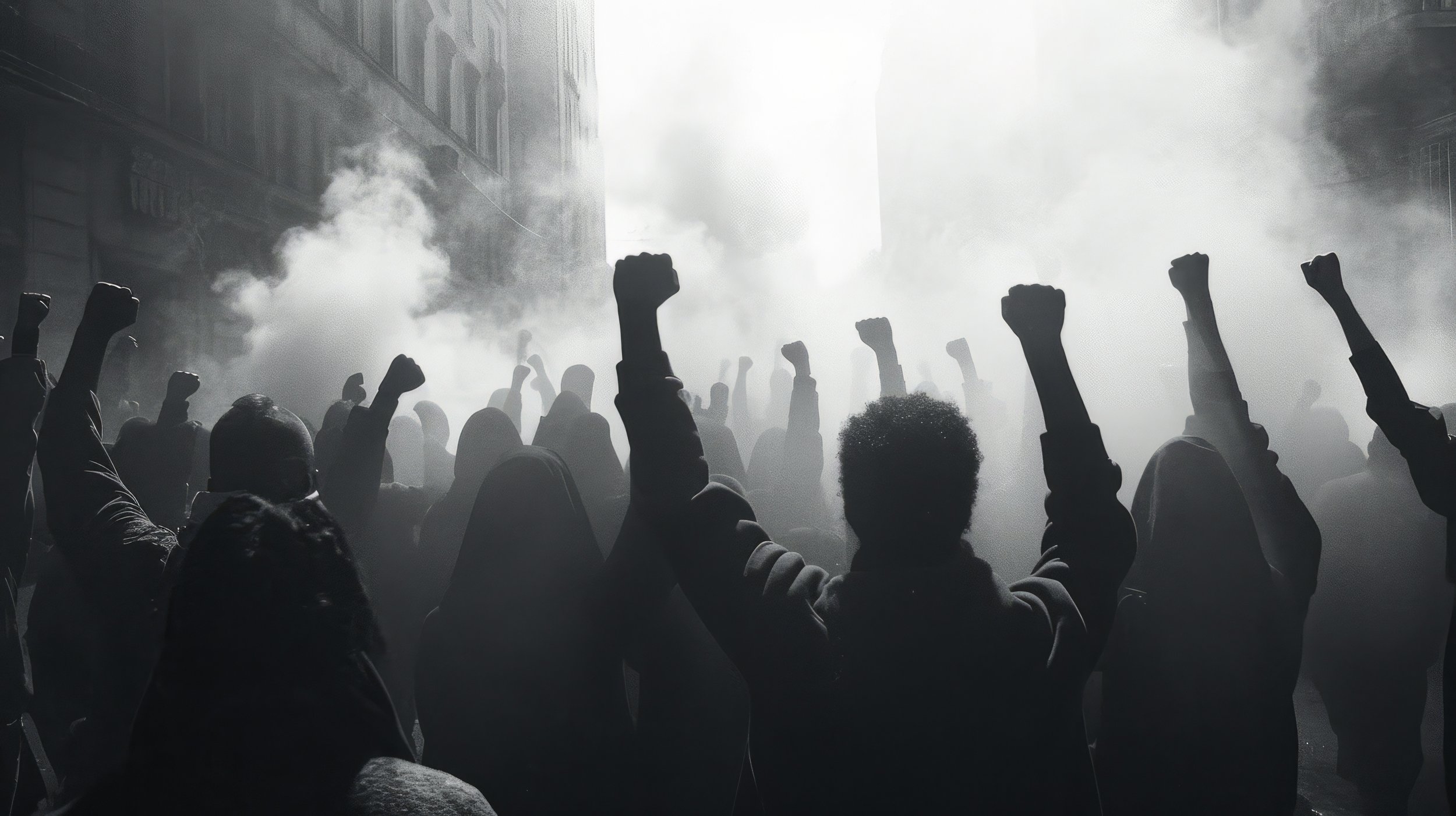
Framework for Action
-

Provide a safe and productive environment to discuss climate goals
Azerbaijan is the third authoritarian government and the second petrostate in a row to host COP. It has appointed a former employee of the state oil company as president of COP29. These conditions make it difficult to discuss meaningful actions to address the climate change crisis. We call for Azerbaijan to ensure that climate activists are actively involved in COP29 and can conduct their work unhindered.
-

End politically motivated imprisonment
The government of Azerbaijan has imprisoned a wide range of civil society actors, including journalists, political opposition leaders, academics, and human rights defenders. We call for all charges against them to be dropped, their immediate and unconditional release, and an end to the weaponization of the judicial system.
-

Hold accountable government officials responsible for torture and mistreatment
Torture is endemic in Azerbaijani prisons. However, there is a lack of accountability for perpetrators. In July 2024, the Council of Europe’s Committee for the Prevention of Torture and Inhuman or Degrading Treatment or Punishment (CPT) took the rare step of issuing a public statement to highlight concern about the Azerbaijani authorities’ persistent lack of cooperation with the body. We call on Azerbaijan to cooperate fully with the CPT and other international human rights monitoring mechanisms and heed their recommendations to address abuses, including ensuring that independent investigations are conducted into allegations of torture and perpetrators are held accountable.
-

Revise laws to lift restrictions on civil society
Azerbaijan has consistently instituted laws that restrict civil society and independent activism. These include a media law, an NGO registration law, and a law on political parties. This legislation has severely shrunk the civic space, making it difficult or impossible for independent entities to function. We call on Azerbaijan to bring its laws into compliance with its international obligations.

A Call for Human Rights and Climate Justice in Azerbaijan
In December 2023, Azerbaijan won the privilege of hosting the 29th United Nations Climate Change Conference (COP29). This decision quickly garnered criticism from the human rights and climate justice communities. The move placed the conference in an oil-rich, authoritarian state whose economy and political stability depend heavily on fossil fuel production and repression. President Ilham Aliyev's regime’s long history of political repression, media censorship, and crackdowns on civil society presented a stark contradiction to the principles of climate action and environmental justice.
Civil society groups—including Azerbaijani activists in exile and international NGOs—mobilized under the Demand Rights at COP campaign to expose these contradictions and demand accountability.
The Goals and Objectives of Demand Rights at COP
Demand Rights at COP spotlighted the regime's abuse of human rights and demanded that Azerbaijan address these issues before and during the conference. The campaign aimed to ensure that COP29 was a platform for meaningful climate dialogue and that it reflected the values of human rights and inclusion. It aimed to counter the false image being put forward by the Aliyev regime, making clear to COP29 participants and the broader world that civil society is not free in Azerbaijan and that environmental and human rights defenders pay the price for their activism with their freedom.
The campaign launched on September 11, 2024—two months before COP29—with a joint statement signed by over 50 human rights and climate organizations. The statement called for Azerbaijan to uphold its international human rights and climate justice obligations.
Key demands on the Azerbaijani government included:
● The release of political prisoners who were wrongfully detained;
● The reform of restrictive laws affecting NGOs, media, and environmental defenders; and
● Accountability for government officials involved in torture and ill-treatment.
They were matched by calls on the international community–including the UN body responsible for COP under the United Nations Framework Convention on Climate Change (UNFCCC), the European Union, United States, and other UN Member States–to leverage their political and economic influence to urge Azerbaijani authorities to take these steps.
The demands were rooted in the belief–acknowledged by the UNFCCC itself–that an inclusive environment of freedom of expression and association is necessary to design and deliver meaningful climate action. Without this, Azerbaijan’s approach would remain incompatible with the open dialogue needed to address the global climate crisis.
Campaign Actions
To maximize advocacy impact, the campaign involved multiple actions and outreach efforts:
Collaboration with global allies: The campaign attracted over 50 signatories from human rights and climate organizations worldwide, creating a unified front for pressing Azerbaijan to end its abuses.
Engagement with policymakers: Campaign members engaged in direct advocacy with the UN, Member States, and international financial institutions.
Public advocacy: Through a central website, media engagement, op-eds, and public events, the campaign raised awareness about the dire human rights situation in Azerbaijan, demonstrating that such a climate inhibits addressing and achieving global climate goals. The campaign developed a tourist-style walking map, “Uncover the Real Baku,” highlighting sites of environmental concern and human rights violations.
Outcomes and Impact
Key achievements included:
Visibility for political prisoners: By publishing the profiles of Azerbaijani political prisoners and telling their stories at public events and international fora the campaign brought attention to the plight of dozens among the over 350 individuals arbitrarily detained by the regime.
Media coverage: The campaign played a crucial role in ensuring that reporting on COP29's proceedings included coverage of Azerbaijan’s human rights abuses. Coverage linked the country’s repressive policies to the failure of COP29 to meet its climate goals.
Increased advocacy momentum: Campaign members successfully encouraged policymakers from the United States, the European Union, and the UN to publicly call for the release of political prisoners and demand civil society participation at COP29.
However, these efforts faced significant resistance. Ultimately, no political prisoners were freed and the Azerbaijani government further tightened restrictions on civil society participation at COP29. President Ilham Aliyev brazenly defended his dirty energy policies and expressed hostility towards Europe, with direct attacks on France and the Netherlands His stance made clear that Azerbaijan’s governance was not just out of step with the climate goals of COP29 but actively pulling in the opposite direction.
Challenges and Lessons Learned
The campaign faced several internal and external challenges, including:
Geopolitical factors: European and U.S. energy interests–particularly in accessing cheap gas from Azerbaijan–undermined meaningful human rights advocacy. This geopolitical reality made it difficult for the international community to take decisive action against the regime.
Repression and harassment: The Azerbaijani government's use of repression, including transnational intimidation tactics, hampered the campaign’s ability to engage key voices, particularly those of activists in exile.
Siloed efforts: While the campaign successfully united human rights and climate groups, divisions within each sector sometimes hindered collaborative action, especially on sensitive geopolitical issues.
Moving Forward: The Need for Continued Advocacy
The Demand Rights at COP campaign laid an important foundation for essential future advocacy. Sustained engagement is crucial to ensuring Azerbaijan's human rights record remains in the spotlight. This involves:
Supporting independent civil society by expanding and facilitating access to financial support and protection for at-risk activists and human rights defenders in Azerbaijan and in exile;
Building long-term partnerships between civil society organizations, governments, and international bodies to place continued pressure on Azerbaijan’s regime; and
Adapting tactics from the campaign, informed by lessons learned and further strategic discussions, to refine civil society advocacy efforts around future human rights and climate crises, including advocacy at COP30.
The Demand Rights at COP29 campaign made one thing clear: the fight for climate justice cannot be separated from the fight for human rights. While the road to change remains long, the campaign sparked a vital conversation, drawing attention to Azerbaijan’s violations and laying the groundwork for a movement that will only grow stronger.
Civil Society Demands Attention to Human Rights and Climate Justice Ahead of COP29
We, the undersigned civil society organizations, movements, groups and individuals, highlight the urgent need to address serious human rights concerns in Azerbaijan in the lead-up to its hosting this year’s United Nations Climate Conference (COP29), to be held in Baku from November 11 to 22, 2024.
Azerbaijan’s government has a longstanding and well-documented pattern of repressing independent civil society and silencing critical voices. Hosting an international gathering such as COP29 in this context raises grave concerns about the ability of civil society, including environmental activists, human rights defenders and journalists, to participate freely and safely before, during and after the conference.
The rare international spotlight on Azerbaijan as it prepares to host COP29 represents a critical opportunity to mark strong concern about its crackdown on independent civil society and press for an end to abuses.
Azerbaijani human rights groups estimate that hundreds of people are behind bars in the country on politically motivated charges. A new wave of detentions is currently under way, with dozens of activists and media figures arrested on baseless, serious criminal charges.
Among those targeted is Gubad Ibadoghlu, a well-known academic and anti-corruption expert who has specialized in Azerbaijan’s oil and gas industry. Dr. Ibadoghlu was violently arrested on July 23, 2023 and the authorities pressed bogus charges against him involving counterfeit money and distributing extremist religious materials. During his 9-month detention, his chronic health conditions deteriorated sharply as a result of the authorities’ refusal to provide him with adequate medical treatment. Dr. Ibadoghlu is currently under house arrest. If convicted, he could face up to 17 years in prison.
Another emblematic case is that of Anar Mammadli, a prominent human rights defender and a founding member of the recently formed Climate of Justice Initiative, a civil society undertaking that seeks to use COP29 to promote civic space and climate justice in Azerbaijan. Mammadli was arrested on April 29, 2024, amid Azerbaijan’s escalating crackdown on independent voices, and charged with spurious currency smuggling.
At least 18 journalists and other individuals affiliated with Abzas Media, Toplum TV and Kanal 13, the last remaining independent outlets in Azerbaijan, are either behind bars or otherwise implicated in baseless criminal prosecutions. Just on August 21, authorities arrested Bahruz Samadov, a PhD candidate at Charles University in Prague and a regular contributor to numerous international and regional publications and media, while he was visiting Baku to spend time with his grandmother. Samadov is in pre-trial detention facing treason charges, widely believed to be related to his outspoken peace activism. On July 22, the authorities arrested another researcher, Igbal Abilov, also on spurious treason charges. He, too, remains in pretrial custody.
In his opening address to the UN Human Rights Council in June 2024, the UN High Commissioner for Human Rights Volker Türk highlighted Azerbaijan for specific concern, “urg[ing] the authorities in Azerbaijan to review, in line with international human rights law, all cases of journalists, activists, and other individuals arbitrarily deprived of their liberty” and to immediately release them.
The government of Azerbaijan has to date refused to heed this and numerous, similar calls by its international partners.
Robust and rights-respecting climate action requires the full and meaningful participation of civil society in climate negotiations, including the key outcome documents of COP29. The dire human rights situation in Azerbaijan makes it incumbent on the United Nations Framework Convention for Climate Change (UNFCCC) Secretariat and member states to take concrete steps to ensure safe space for diverse civil society participation at COP29. They should ensure that the government of Azerbaijan does not inhibit individuals and groups critical of the government from participating in the conference and that the host government respects the rights of all participants to speak freely and to peacefully assemble inside and outside the conference venue.
This year’s climate conference is the third in a row to take place in an authoritarian country –following Egypt and the United Arab Emirates as hosts of, respectively, COP27 and COP28. As highlighted by the UN and other independent experts, respect for freedom of expression, peaceful assembly and association, and allowing critical voices and the free flow of information, are integral to effectively and meaningfully tackling the climate crisis, and should be a core requirement for hosting events such as COP.
The UNFCCC should set human rights criteria for future COP hosts, including an obligation to realize the rights to freedom of speech and assembly that are preconditions to ensure an ambitious COP outcome. In addition, for this and future climate COPs, the UNFCCC should make host country agreements – which set out arrangements between COP summit organizers and host country authorities – public and accessible in a timely manner, and ensure that they comply with international human rights law.
The UNFCCC and member states should also ensure that interests of the fossil fuel industry do not undermine the credibility and outcome of climate negotiation at COP29 and future COPs.
We urge UNFCCC and member states to press the Azerbaijani government to respect its human rights obligations, including by immediately and unconditionally releasing arbitrarily detained activists and human rights defenders. They should also call on Azerbaijani authorities to implement concrete, measurable, structural reforms, such as amending its laws regulating nongovernmental organizations and media, to ensure that positive changes endure beyond COP29, and put into place mechanisms for follow-up monitoring, to verify that progress is upheld and to enable effective and timely intervention in the event of any backsliding, especially in any cases of retaliation or backlash traceable to engagement in or around the climate talks.
We urge the government of Azerbaijan to uphold its commitments as a member of numerous multilateral organizations and initiatives that have human rights elements, and its obligations as a party to key international human rights treaties, by taking the following steps:
Immediately and unconditionally release all human rights defenders, journalists, and civil society activists wrongfully held on politically motivated grounds, and drop the bogus charges against them;
Cease the use of criminal prosecution as a tool to suppress government critics and members of civil society;
Lift undue restrictions on civil society by amending laws related to registration and funding of nongovernmental groups and media, bringing them into compliance with international standards and recommendations issued by the Council of Europe’s Venice Commission.
UNFCCC member states and Secretariat, and other key international actors and organizations, such as the European Union, the Council of Europe, the Organization for Security and Co-operation in Europe, the European Bank for Reconstruction and Development, and the World Bank Group, as well as companies with business interests in Azerbaijan, should all stand in firm solidarity with Azerbaijan’s independent civil society. Many civic actors, at great personal risk, continue to fight for human rights and climate justice in the country and the region. Azerbaijan’s international partners should put their weight behind the calls for specific steps made here, hold Azerbaijan accountable and help ensure that the government takes them as a matter of urgent priority.
Organizations
350.org
Anar Mammadli Campaign to end repression in Azerbaijan
Araminta
Bir Duino-Kyrgyzstan
CEE Bankwatch Network
Center for American Progress
Centre for Citizens Conserving Environment & Management (CECIC)
Climate Rights International
Committee to Protect Journalists
Common
Crude Accountability
Culture Unstained
Endangered Scholars Worldwide
European Exchange
European Platform for Democratic Elections (EPDE)
FIDH (International Federation for Human Rights), within the framework of the Observatory for the Protection of Human Rights Defenders
Forbidden Stories
Freedom Now
Gastivists Collective
Heinrich Böll Stiftung
Human Rights Centre ZMINA
Human Rights Defense Center "Memorial"
Human Rights Foundation
Human Rights House Foundation
Human Rights Watch
International Partnership for Human Rights
Kazakhstan International Bureau for Human Rights
Legal Policy Research Centre
London Mining Network
Mothers Rise Up
Natural Resource Governance Institute
New University in Exile Consortium
Norwegian Helsinki Committee
Open Contracting Partnership
PEN America
PEN International
People in Need
Public Verdict Foundation
Publish What You Pay
ReCommon
Reporters Without Borders (RSF)
Robert F. Kennedy Human Rights
Sphere Foundation
Urgewald
World Organisation Against Torture (OMCT), within the framework of the Observatory for the Protection of Human Rights Defenders
Individuals
Alice Crary, University Distinguished Professor, Philosophy, The New School
Corinna Gilfillan
Johan Heilbron, Uppsala University, Sweden
Simon Taylor, Co-Founder & Director, Hawkmoth
If you or your organization are interested in signing on to the statement, please complete this form to request to join.
Uncover the Real Baku
Baku, the capital of Azerbaijan, is an ancient city where human settlement can be traced back to the Stone Age. Today, it is home to more than 5 million Azerbaijani citizens, the largest city in Caucasus region. Those visiting the metropolis in November 2024 for COP29 will want to take in its many sites, including the OId City, the National Museum of History, and Baku Boulevard. However, there are many sites in the city that stand as reminders of Azerbaijan’s human rights abuses as well as industrial sites that power Azerbaijan’s petrostate, funnelling billions into the hands of elites. Explore the interactive map below to learn more or click here to access a printable brochure which highlights key sites.
Not at COP
A global gathering of independent civil society outside Baku
Political Prisoners
As of July 2025, there are more 375 political prisoners in Azerbaijan. The cases featured here are examples from the most recent crackdown against civil society that began in December 2022 and are emblematic of the various ways in which the Azerbaijani government misuses its judicial system to punish independent actors in the country. The diversity of the government’s targets, from civil society leaders to labor activists to academics, demonstrates the far reaches of the government’s intolerance.
-

Bakhtiyar Hajiyev
-

Gubad Ibadoghlu
-

Elvin Mustafayev
-

Aykhan Israfilov
-
Jamil Mammadli
-

Rail Abbasov
-

Afiaddin Mammadov
-

Ulvi Hasanli
-

Mahhamad Kekalov
-

Sevinj Vagifgizi
-

Aziz Orujov
-

Nargiz Absalamova
-
Ilhamiz Guliyev
-

Arshad Ibrahimov
-
Teymur Karimov
-

Ibrahim Humbatov (Ibrahim Gubadoglu)
-

Mohyeddin Orucov
-

Hafiz Babali
-
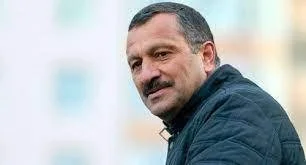
Tofig Yagublu
-

Elnara Gasimova
-

Akif Gurbanov
-

Ali Zeynal
-

Ramil Babayev
-

Mushfig Jabbar
-

Ilkin Amhrahov
-

Alasgar Mammadli
-

Ruslan Izzatli
-

Imran Aliyev
-
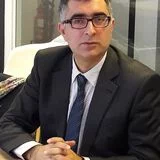
Anar Mammadli
-

Farid Mehralizade
-

Iqbal Abilov
-

Bahruz Samadov
-

Aynur Ganbarova
-

Natig Javadli
-

Khayala Aghayeva
-

Aytaj Ahmadova
-

Aysel Umudova
-

Ramin Jabrayilzada
-

Ulvi Tahirov
-

Rufat Safarov
-

Azer Gasimli
-

Farid Ismayilov
-

Shanaz Huseynova
-

Shamshad Aghayev
-

Nurlan Gahramanli
-

Fatima Movlamli
-

Arzu Mammadov
-
Fazil Gasimov
-

Bashir Suleymanli
-

Mammad Mammadzade (Alpay)
-

Hafiz Hasanov
-

Anar Abdulla
-

Zamin Zakiyev
-
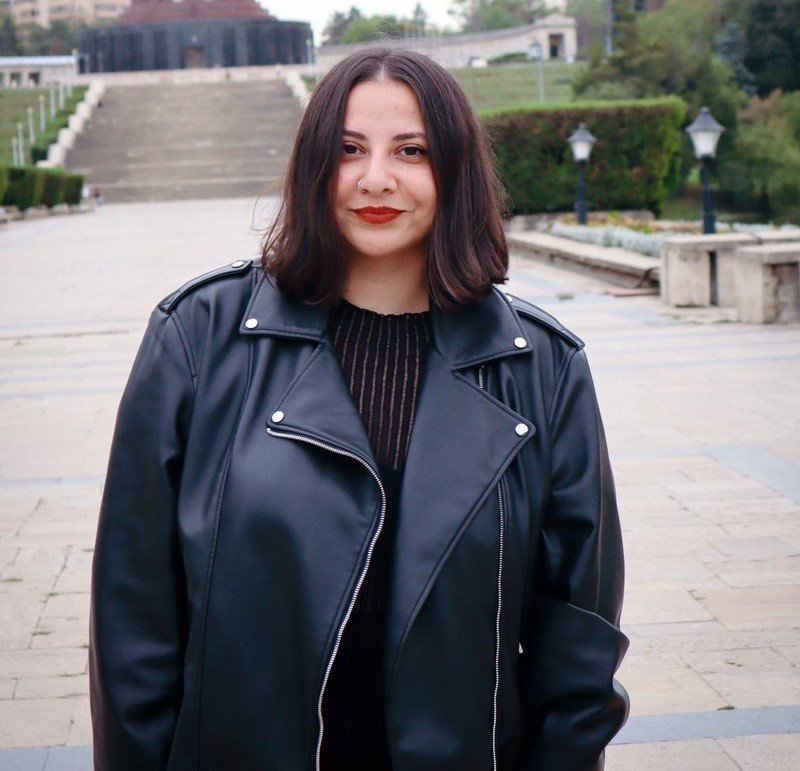
Ulviyya Ali
-

Ahmad Mammadli

Frequently Asked Questions
-
COP, which stands for Conference of Parties, is the main decision-making body for the United Nations Framework Convention on Climate Change (UNFCCC). At its annual meeting, governments assess global efforts to advance the Paris Agreement and the Convention, and limit global warming to 1.5°C, as informed by the latest science. At COP, world leaders come together to measure progress and negotiate the best ways to address climate change.
There are now 198 Parties (197 countries plus the European Union) to the Convention, constituting near-universal membership.
-
The next Conference will take place in Baku, Azerbaijan, from November 11 to 22, 2024.
This marks the third consecutive year that an authoritarian country is hosting COP, following Egypt in 2022 and the United Arab Emirates in 2023.
-
Yes. Numerous independent observers have categorized Azerbaijan as an authoritarian state with severely limited political and civic freedoms.
The Economist’s 2023 Democracy Index labels Azerbaijan as authoritarian, giving it a score of 2.8 out of a possible 10, placing it 130th out of 167 countries.
The V-Dem Institute has labeled Azerbaijan an “electoral autocracy.” It ranks in the bottom 10-20% of the Institute’s Liberal Democracy Index, just above Russia.
Freedom House’s 2024 Nations in Transit report identifies Azerbaijan as a “consolidated authoritarian regime,” giving it a score of 1 out of 100. Likewise, the 2024 Freedom in the World report categorizes Azerbaijan as Not Free, giving it a 0/40 for Political Rights and 7/60 for Civil Liberties.
Reporters Without Borders’s World Press Freedom Index ranks Azerbaijan 164 out of 180 countries.
Since assuming office in 2003, the government led by President Ilham Aliyev has severely limited political competition and pluralism and committed widespread violations of human rights and fundamental freedoms. Although the country’s constitution establishes a dual executive system with a president, a prime minister, and separate branches of government, Aliyev and his New Azerbaijan Party have effective control over the executive, legislative, and judicial branches. The New Azerbaijan Party controls the National Assembly and exerts tremendous influence over the legislation that it adopts. A deeply flawed referendum in 2016 resulted in the adoption of nearly 30 constitutional amendments that significantly expanded Aliyev’s power, and was denounced by Western observers. Among the changes were the extension of the presidential term from five to seven years, the creation of the post of first vice president, directing succession from the president to the first vice president, and granting the president the ability to dissolve parliament. Five months after the changes were passed, Aliyev named Mehriban Aliyeva, his wife, to the post of first vice president. In February 2024, Aliyev won a fifth consecutive term with 92% of the vote, keeping him in office until at least 2031.
-
Yes. Transparency International’s Corruption Perceptions Index gives Azerbaijan a score of 23 out of 100 placing it 154 out of 180 countries.
A 2012 report by the European Stability Initiative entitled Caviar Diplomacy described how the Azerbaijani regime gained influence with European policymakers by offering bribes.
In 2017 it was revealed that Azerbaijan spent $2.9 billion dollars between 2012 and 2014 to curry influence, pay lobbyists, apologists, and to launder cash. The scheme, known as the Azerbaijani Laundromat, spent money in Germany, the UK, France, Turkey, Iran, and Kazakhstan. The source of the money is not always clear but it came from companies linked in President Aliyev, state ministers, the International Bank of Azerbaijan.
-
No. Azerbaijan’s economy is dominated by oil and gas, which account for 89% of its nearly $40 billion in annual export revenue. Several pipelines that supply the region start in Azerbaijan. The most consequential of these is the Southern Gas Corridor, the European Union’s twelve-year, $45 billion project to build a network of pipelines from Azerbaijan to Italy to reduce European dependence on Russian natural gas. Azerbaijan exports approximately 10 billion cubic meters of natural gas to Europe annually through the corridor, amounting to 10 percent of gas imports to the EU.
-
Beginning in December 2022, Azerbaijan initiated a crackdown on civil society that resulted in the arrest of dozens of journalists, civic activists, lawyers, and political opponents under spurious and politically motivated charges.
The recent spate of arrests fits a familiar pattern in Azerbaijan and the government’s well-documented record of restricting internationally-protected human rights. The government has initiated a series of crackdowns on civil society over the past 15 years, often corresponding with events where local dissidents were able to draw international attention to the dire human rights situation in the country. The trend began around the time of the Arab Spring movements in 2011 and has continued through Baku’s hosting of the 2012 Eurovision Contest, the presidential election of 2013, Azerbaijan’s leadership of the Council of Europe’s Committee of Ministers in 2014, the country’s hosting of the European Olympic Games in 2015, the parliamentary elections of 2015, the constitutional referendum of 2016, the COVID-19 pandemic, and the Second Nagorno-Karabakh War.
-
As of August 2024, Azerbaijani activists have documented 303 individuals currently detained on politically-motivated charges. More than 100 of these individuals were arrested in the last year. You can learn more about individual prisoners here on our website.
-
Civic space is shrinking in the country. For example, a new media law, passed in December 2021, created new rules requiring outlets to register with the government, journalists to complete unrealistic training, and outlets to publish a minimum of 20 items per day, a nearly impossible benchmark for small independent outlets.
A new law on political parties came into effect in January 2023 that introduced new restrictions on registering parties and requires that parties submit to the government a complete list of their members, including their national ID numbers and addresses. The law is so restrictive that at least 15 pro-government parties have been dissolved as a result.
Complicated and onerous registration procedures create a barrier for individuals who desire to start non-governmental organizations (NGOs). Under Azerbaijan’s NGO law, the government can interfere with an organization’s operations and funding, or even shutter the organization completely. Moreover, prosecutors have used the criminal code to imprison NGO leaders for ostensibly failing to adhere to regulations. Amendments between 2013 and 2015 gave authorities broad discretion to dissolve, fine, and freeze assets of NGOs for infractions of administrative regulations. More recently, amendments granted tax exemptions to some NGOs and established a simplified online registration. However, many organizations are unable to register because they are officially rejected or never received a decision from the Ministry of Justice. In May 2021, the European Court of Human Rights issued 25 judgments that found Azerbaijan violated its citizens’ right to freedom of association by failing to register NGOs.